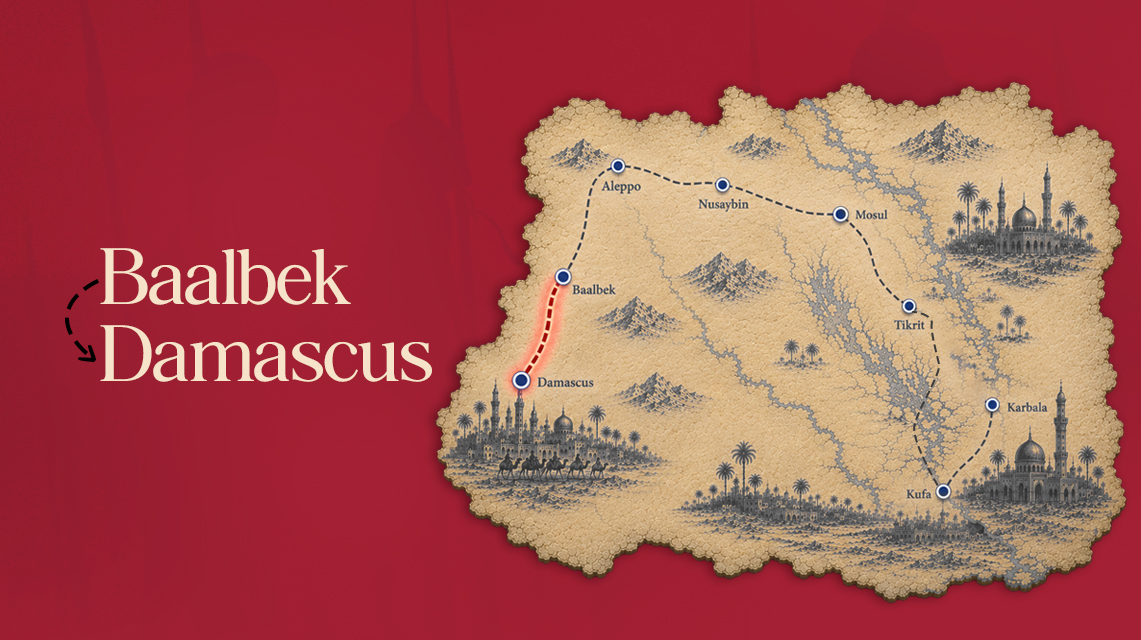
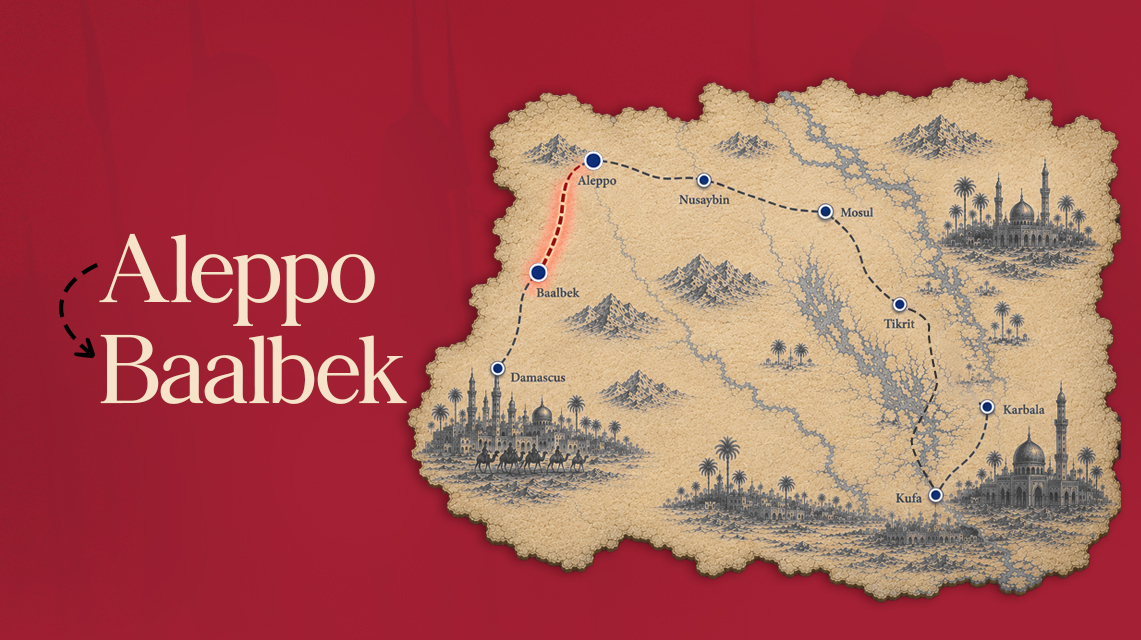
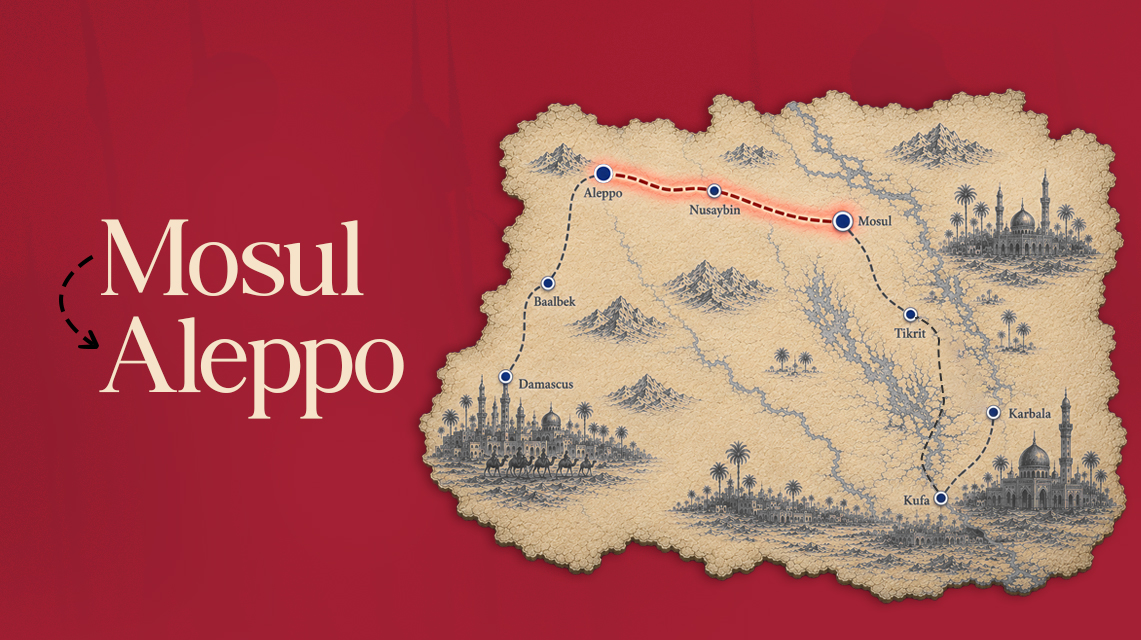
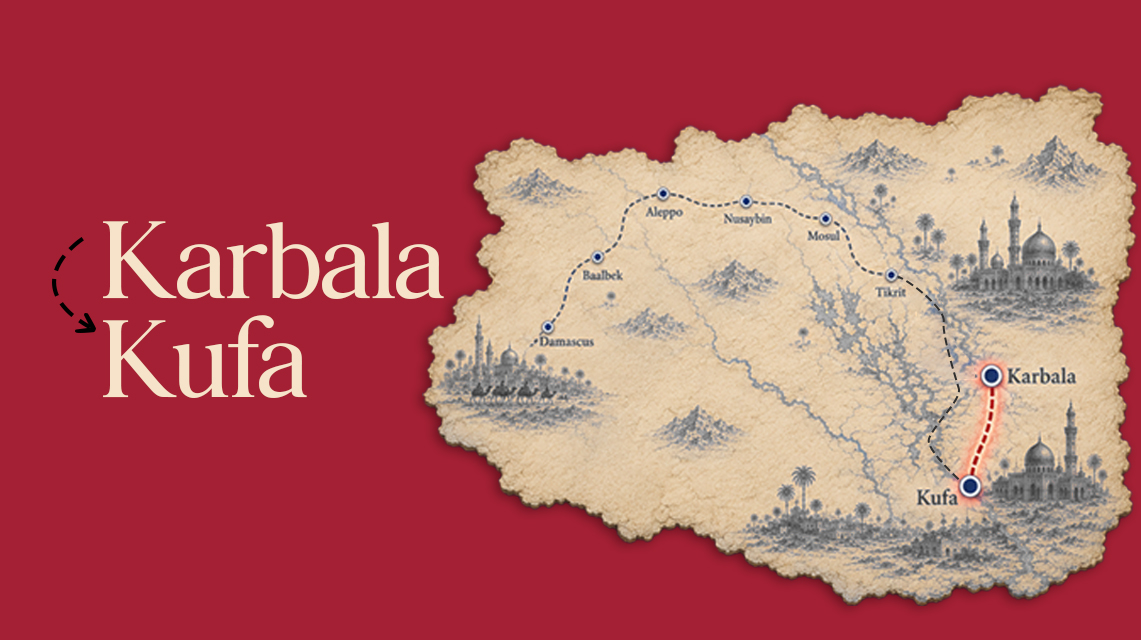
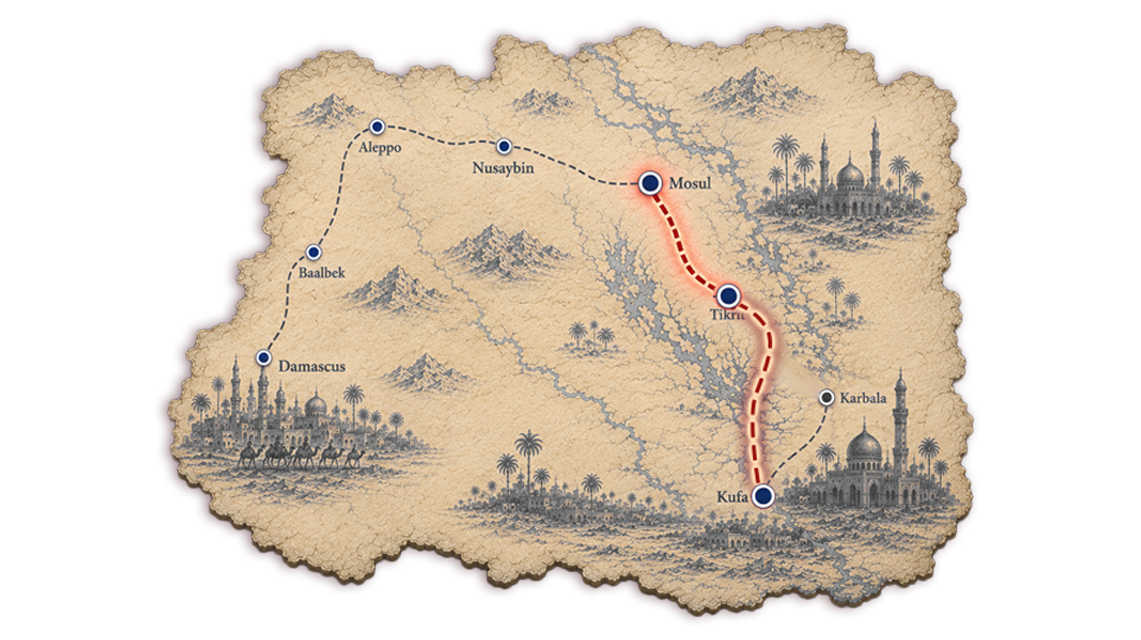
After receiving Yazid’s instructions, Ubaydullah ibn Ziyad entrusted the heads of Imam Husayn and the other martyrs to Zahr ibn Qays. The caravan then departed Kufa and began its journey northwards, with an escort that also included Abu Burdah bin Aun Azdi, Tariq bin Zabiyan and a group of men from Kufa.
Historical reports differ on whether the captives travelled with the heads or joined the convoy afterwards. Some say that they were sent behind the heads with Makhfar ibn Sa’labah A’ezee and Shimr ibn Ziljawshan, while others state that they departed Kufa with the heads of the martyrs.
Sources also mention that, fearing an attack from tribes sympathetic to Imam Husayn, the guards deliberately avoided the main roads and travelled along lesser-used routes, which made the journey significantly longer.
What followed was a journey marked by pain and suffering.
The First Stop
The first recorded stop of the convoy after leaving Kufa was at a desolate place. Although the name of this place is not identified in sources, an extraordinary event is reported to have taken place there.
As the soldiers of Ibn Ziyad were busy drinking and celebrating, a hand suddenly appeared from the wall and wrote the following lines in blood with an iron pen:
أَتَرجو أُمَّةٌ قَتَلَت حُسَينًا
شَفاعَةَ جَدِّهِ يَومَ الحِسابِ
“Does a nation that killed Husayn
Hope for the intercession of his grandfather on the Day of Judgment?”
When the soldiers saw this strange sight, they fled in fear, leaving the head behind, before eventually returning to continue the journey.
This incident is reported in both Shi’ah and Sunni books.
Tikrit
The caravan’s next major stop was Tikrit, an Iraqi city with a large Christian population.
When the convoy reached here, the local governor sent a large contingent, with flags, to receive it.
Whenever the locals asked whose head was being carried, the soldiers replied that it belonged to “a Kharijite.”
But one of the townspeople recognized the head of Imam Husayn and declared:
“This is not true. This is the head of Husayn ibn Ali, son of Fatimah. I was in Kufa when he was killed.”
The revelation shocked the city’s residents. Historical reports state that many Christians of Tikrit expressed their disgust at the killing of the Prophet’s grandson, rang their church bells in mourning, and sought refuge in God from those responsible for the crime.
Faced with unexpectedly strong opposition, the convoy abandoned its planned route and hurriedly left the city.
Wadi al-Nakhlah
After being forced to flee Tikrit, the caravan continued northwards, along the ancient riverine highway of Mesopotamia, and reached Wadi al-Nakhlah, where the Umayyad soldiers camped for the night.
Historical reports mention that throughout the night, the soldiers heard the lamentations of the jinn mourning Imam Husayn.
Mosul
The caravan then continued towards Mosul, a historic city in northern Iraq, around three hundred twenty-five miles from Kufa.
Before the convoy reached Mosul, Shimr instructed the governor to decorate the city in preparation for the arrival of what the Umayyads described as a victorious army.
The residents of Mosul, however, resisted it as they loved and respected the Ahlulbayt. They insisted that the convoy could be supplied with whatever provisions they required, but they should not be allowed to enter the city.
There are also reports that as many as four thousand people had prepared to seize the head of Imam Husayn and bury it with honour.
Upon learning of these developments, the convoy halted about five kilometres (one farsakh) outside Mosul.
Historical accounts relate that when the caravan camped at this place, Shimr placed the head of Imam Husayn upon a boulder. A drop of blood fell on the stone, and every year thereafter, on the Day of Ashura, fresh blood would emerge from that spot.
It remained a place of remembrance until the boulder was removed by Marwan ibn Hakam. Since then, there has been no trace of it.
Sources Consulted
Support Thaqlain
Help us create more research-driven resources on the history of the Ahlulbayt.