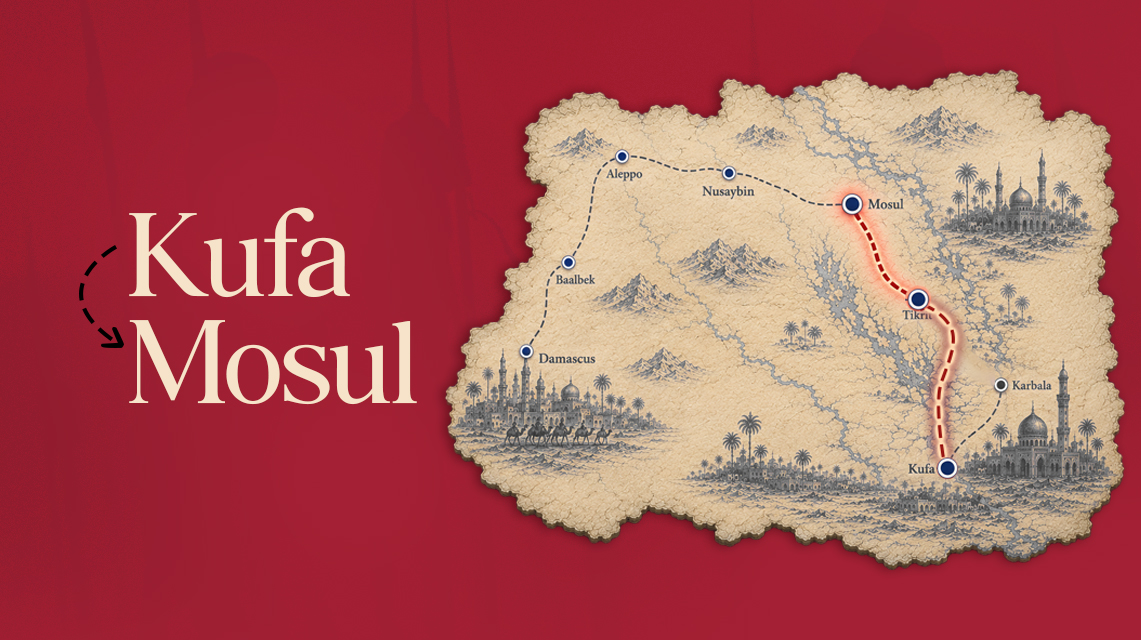
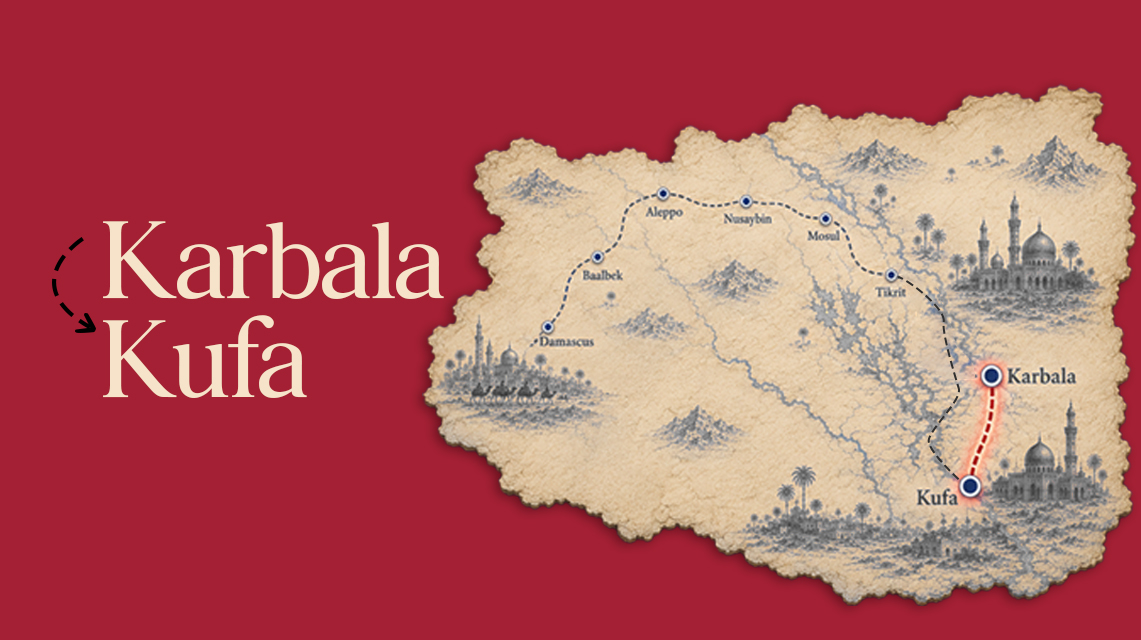
The further the caravan travelled southwards through Syria, the harder it became for the Umayyads to control the narrative.
Unlike the frontier towns through which the caravan had recently passed, the cities of central Syria brought the captives before larger populations.
As more people witnessed the captives and learned whose heads were being carried, they began to recognise the enormity of what had taken place at Karbala.

Qansareen
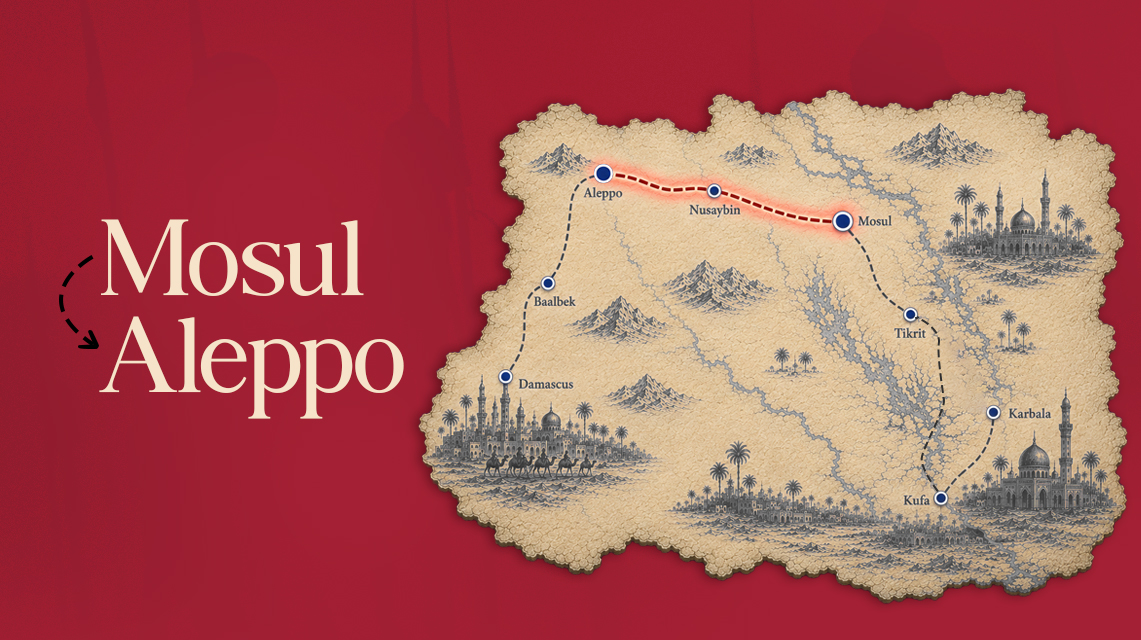
One of the earliest stops after leaving Aleppo was Qansareen (Qinnasrin), where the caravan halted for the night. It was here that one of the most remarkable incidents of the journey is reported to have occurred.
Historical accounts relate that a Christian monk saw a beam of light rising from Imam Husayn’s head towards the sky. Deeply moved by what he witnessed, he offered the soldiers ten thousand dirhams in exchange for keeping the head for one night, and they accepted.
He took the head into his monastery, washed and perfumed it, and spent the night honouring it. Some sources also report a miraculous conversation between the monk and the head, after which he accepted Islam.
Before dawn, the monk returned the head, and the caravan resumed its journey. When the soldiers later opened the box where they had kept the money, they found that the 10,000 dirhams had turned into stones.
Shayzar and Kafre Taab
From Qansareen, the caravan continued southwards, halting briefly at Ma’arrat al-Numan, before reaching Shayzar.
Here, an elderly man recognised the head of Imam Husayn and called on the townspeople to prevent the caravan from entering the city.
The people swore not to allow Ibn Ziyad’s soldiers into their city, forcing the convoy to continue towards Kafre Taab, where it was met with the same response.
Sources mention that the residents of Kafre Taab shut their doors and refused to even provide the soldiers with water, saying:
“You killed Husayn and his companions while they were thirsty!”
Faced with continued resistance, the convoy was once again forced to move on.
Saibur
The resistance intensified the further the caravan moved.
At Saibur, an old man tried to persuade the townspeople to let the caravan pass peacefully, but the youth refused. They demolished the bridge leading into the town, armed themselves, and confronted the convoy.
A clash broke out between Ibn Ziyad’s soldiers and the people of Saibur, in which several people were killed.
Narrations relate that when Lady Umm Kulthum learned of their stand, she prayed for the people of the town, asking Allah to bless their provisions, make their water sweet, and protect them from oppression.
Hama and Homs
The next stop was Hama, where the convoy again found the city gates closed against them, leaving no choice but to move onwards.
As the caravan approached Homs, the soldiers informed the local governor of their arrival and requested entry into the city. However, the residents refused. When the soldiers attempted to enter, they were met with a barrage of stones that killed several members of the escort.
The soldiers then attempted to enter through the eastern gate, but the locals barred that entrance as well, crying:
“No disbelief after faith, no misguidance after guidance! We will never allow the head of the Imam to enter our city!”
The resistance at Homs marked one of the strongest public confrontations the convoy had yet faced. Unable to force their way into the city, the soldiers had no choice but to continue towards Baalbek.
Baalbek
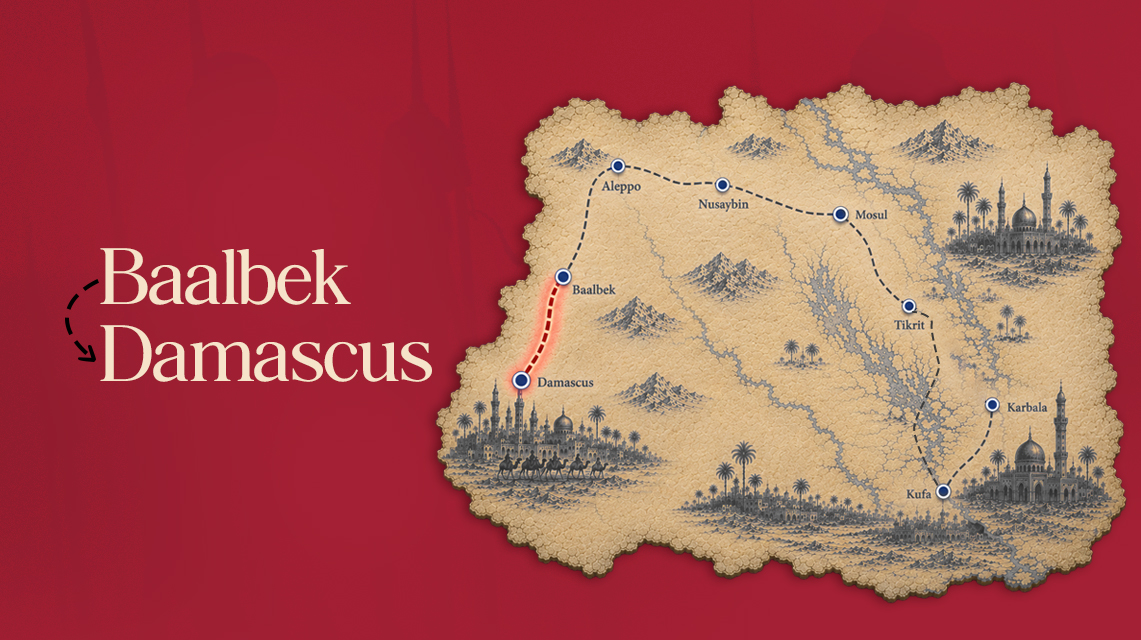
Unlike the towns the caravan had recently passed through, Baalbek, a city in present-day Lebanon, welcomed the procession. The governor ordered the townspeople to come out with their children to witness the captives as they were paraded through the city on unsaddled camels.
Witnessing the humiliation inflicted upon the family of the Prophet, Lady Umm Kulthum is reported to have cursed this town. Some reports state that Imam Zayn al-Abidin also recited poetry lamenting their condition.
The convoy camped at Baalbek for the night before setting out on the final stretch of the journey to Damascus the following morning.
Sources Consulted
Support Thaqlain
Help us create more research-driven resources on the history of the Ahlulbayt.