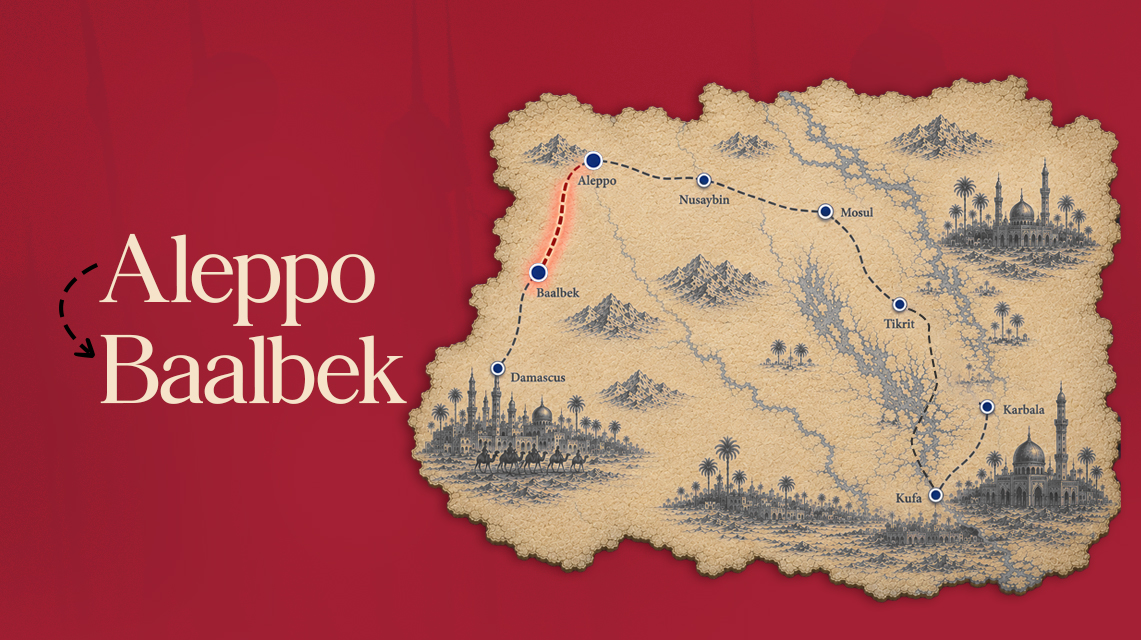
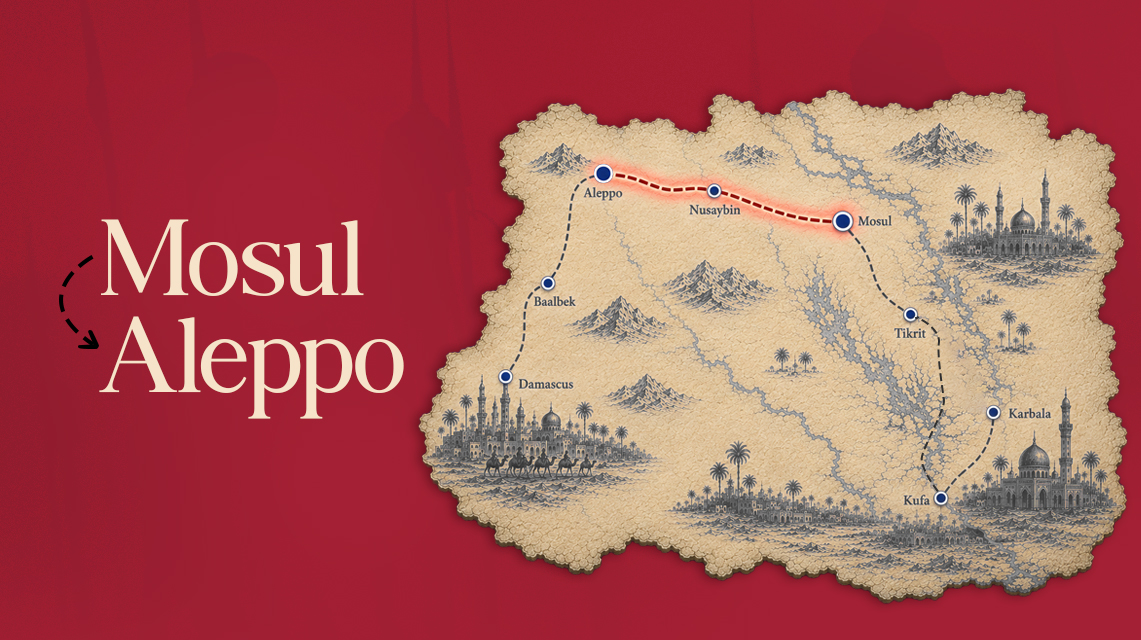
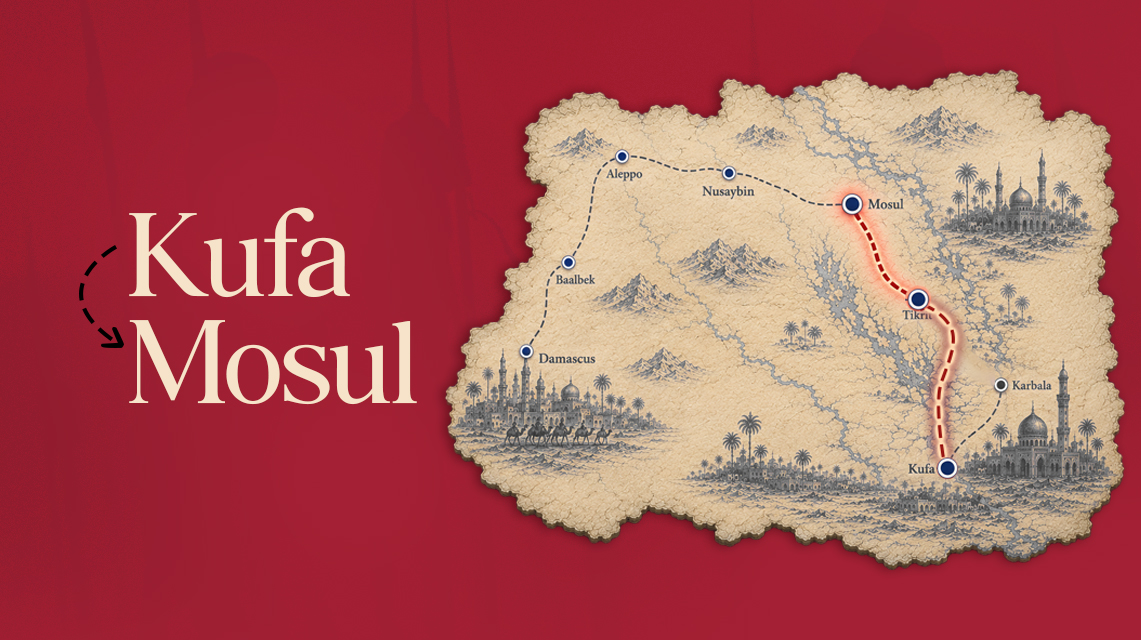
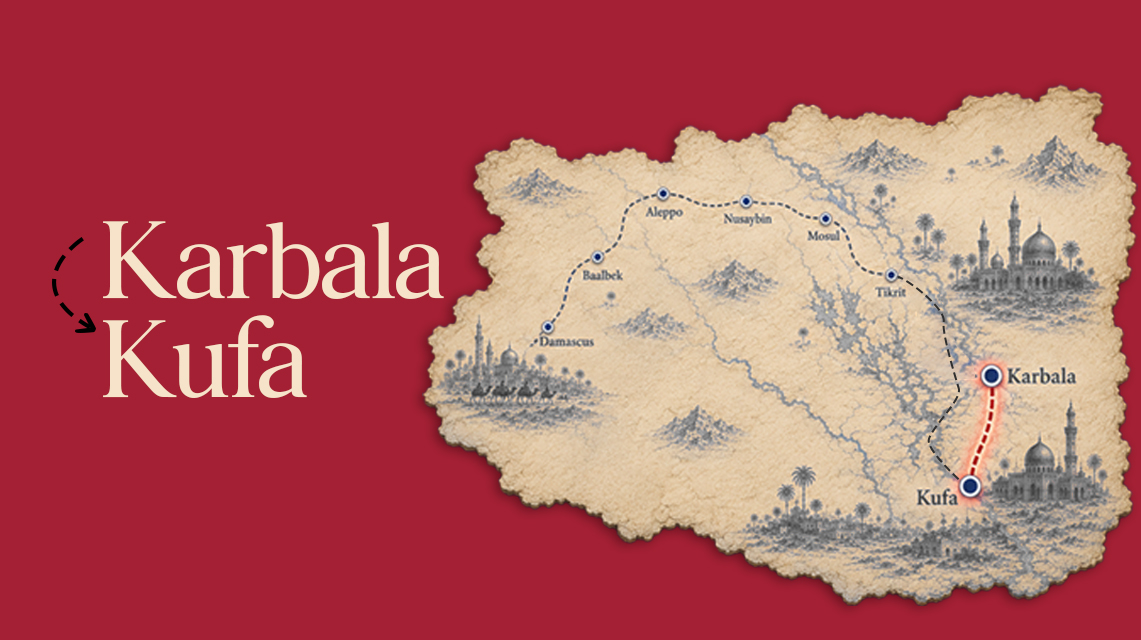
After travelling over 1,800 kilometres across Iraq, Syria, and present-day Lebanon, the caravan finally approached Damascus, the capital of the Umayyad Empire.
Nearly three weeks had passed since the tragedy of Karbala, and the captives had endured a long and arduous journey.
Throughout the route, the Umayyad authorities had sought to present the martyrdom of Imam Husayn as the defeat of a rebellion. Now, in the heart of their empire, they had prepared for the largest public display yet.

At the Gates of Damascus
As the caravan neared Damascus, Lady Umm Kulthum made one final plea to Shimr:
“Take us through a gate where there are fewer people, and carry the heads away from our litters so that the crowd is not drawn to stare at the women of the Messenger of Allah.”
But Shimr deliberately did the opposite.
He led the caravan into the city through Bab al-Sa’at, one of Damascus’s busiest gates, where large crowds had assembled to witness the procession. He also ordered that the heads remain alongside the captives so the procession would attract as much attention as possible.
Some reports also state that the Ahlulbayt were made to wait outside Damascus for three days while preparations for the public display were completed.
Through the Streets of Damascus
Damascus had been prepared for celebration.
The streets were decorated, people dressed in festive clothing, and crowds lined the roads to witness what they had been told was the victory of the Umayyad army.
As the convoy entered the city, the heads of the martyrs were carried at the front upon spears. Behind them followed the surviving members of the Prophet’s family, exhausted after weeks of travel, mounted upon unsaddled camels.
The caravan wound its way through the streets and marketplaces of Damascus before finally reaching the Umayyad Palace.
For many Syrians, this was their first encounter with the family of the Prophet. Having heard only the Umayyad account of events, many expected to see rebels defeated in battle. But what they witnessed led many to question who these prisoners truly were and the narrative they had long been told.
Entry into Yazid’s Court
The procession eventually reached the Umayyad Palace, where Yazid ibn Mu’awiyah had assembled members of his court, military commanders, tribal leaders, and dignitaries to witness what he intended to be the culmination of his victory and the final proof of his authority.
When the head of Imam Husayn was placed before Yazid, reports describe him striking the Imam’s lips with a staff while reciting verses celebrating revenge for the Battle of Badr.
His actions shocked several of those present.
Among those in attendance was the Companion of the Prophet, Abu Barzah al-Aslami. He openly rebuked Yazid and reminded him that he had personally witnessed the Messenger of Allah kiss those very lips.
Reports also describe several other members of the court expressing discomfort as they came to realise that those standing before them were the family of the Prophet.
The Truth Reaches Damascus
It was in Yazid’s court that the carefully constructed Umayyad narrative finally began to collapse.
Lady Zaynab delivered a sermon that exposed the injustice committed at Karbala, challenged Yazid’s claims of victory, and reminded the audience that the prisoners before them were none other than the family of the Messenger of Allah.
Imam Zayn al-Abidin also addressed the gathering, introducing himself and recounting the virtues and lofty status of the Ahlulbayt. His words made clear the identity of those whom the Umayyad authorities had sought to portray as rebels and the reality of what had taken place.
As the truth spread through Damascus, sympathy for the captives grew while criticism of Yazid intensified.
The grand public celebration intended to affirm Umayyad authority became the means by which the message of Karbala reached the heart of the empire.
Imprisonment and Release
Following the audience with Yazid, the women and children of the Ahlulbayt were taken to a place near the Umayyad Mosque, where prisoners were commonly held, and detained there.
Reports differ regarding the length of Ahlulbayt’s imprisonment in Damascus. But historians generally agree that mounting public pressure made it increasingly difficult for Yazid to keep the family of the Prophet as captives.
As public sentiment shifted, Yazid attempted to distance himself from the tragedy by placing responsibility upon Ubayd Allah ibn Ziyad, claiming that the governor of Kufa had acted independently.
Though politically motivated, this marked a significant shift from the triumphalism that had accompanied the caravan’s arrival.
Eventually, Yazid ordered that the captives be released. He also instructed that they be treated respectfully and arranged an escort to accompany them on their return journey.
Departure from Damascus
When preparations were complete, the Ahlulbayt departed Damascus under escort.
Many historical sources state that they requested to travel via Karbala before continuing to Madinah, where they mourned Imam Husayn and the martyrs. Other reports, however, differ regarding the exact route they followed after leaving Syria.
The Journey Ends
Damascus marked the end of the forced journey of Ahlulbayt from Karbala, but it also marked the beginning of the Umayyads’ political defeat.
The public display intended to legitimise Yazid’s rule instead ensured that the events of Karbala would be remembered by generations to come.
What the Umayyads sought to erase became one of history’s most enduring testimonies to faith, sacrifice, and resistance against oppression.
The Fate of the Heads
Historical reports differ regarding what became of the blessed heads of Imam Husayn and the other martyrs after the events in Damascus.
According to the view widely accepted among Shi’i scholars, Yazid eventually returned the heads to Imam Zayn al-Abidin, who carried them from Damascus and reunited them with the bodies of the martyrs at Karbala.
Other accounts, however, maintain that the heads remained in Syria for a period before being buried or transferred.
As with several aspects of the post-Karbala journey, historians have preserved differing accounts, and no single view has gained universal acceptance.
Sources Consulted
Support Thaqlain
Help us create more research-driven resources on the history of the Ahlulbayt.