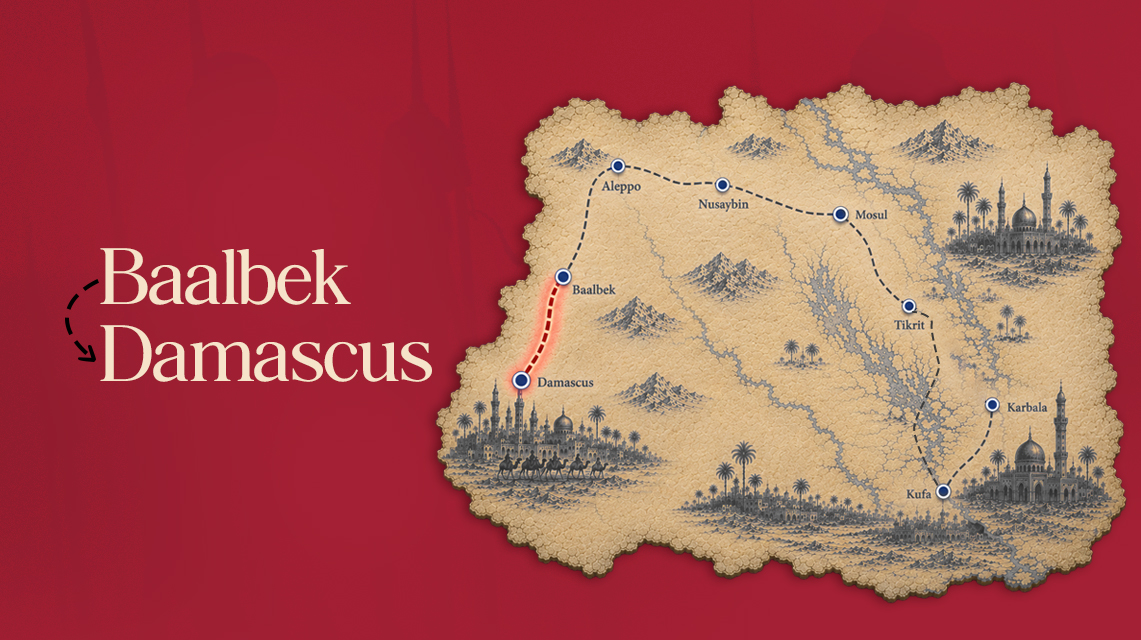
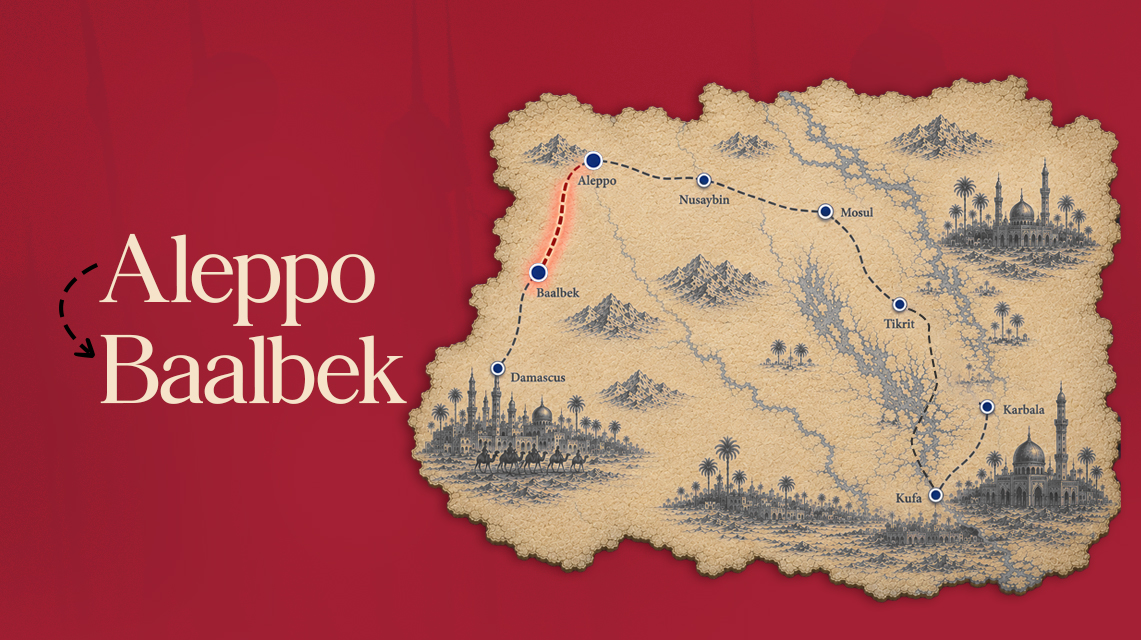
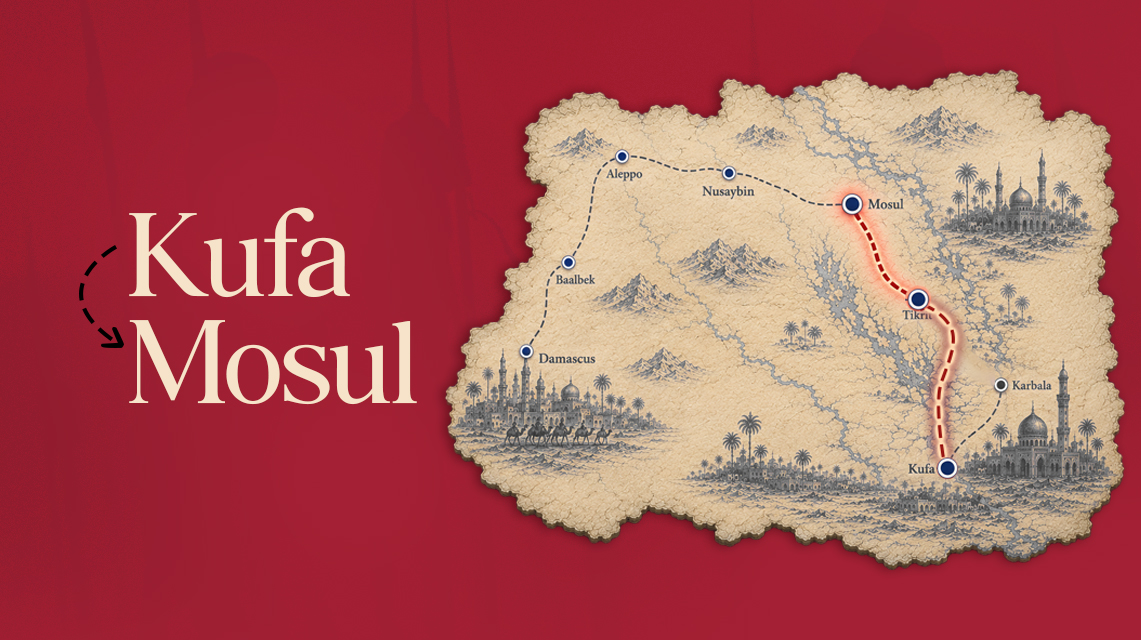
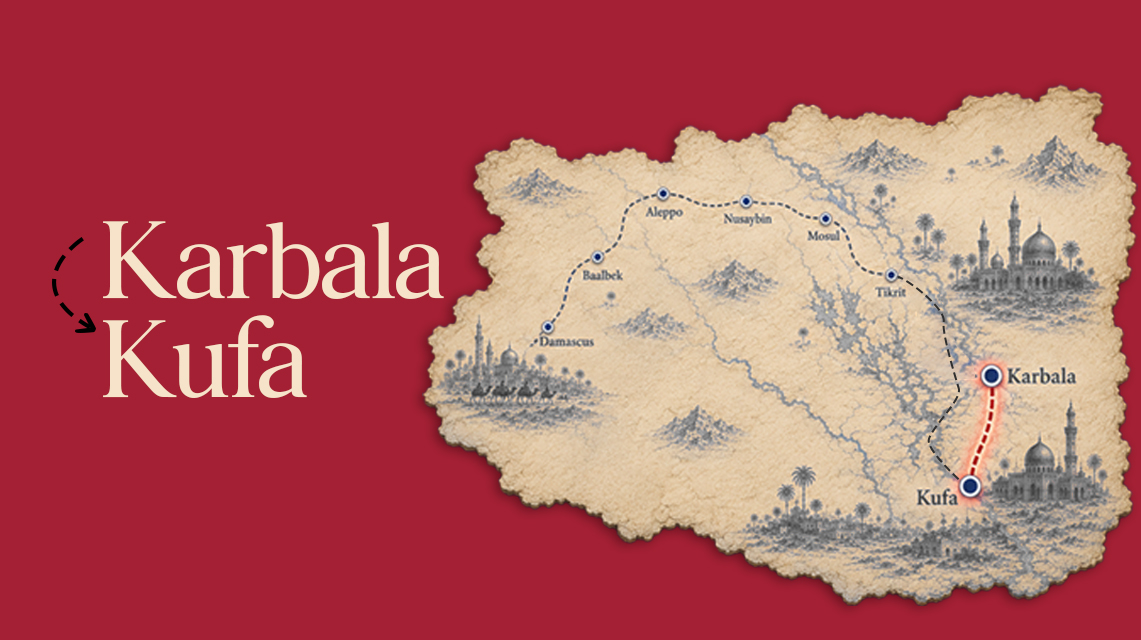
After being denied entry into Mosul, the caravan changed course and continued westwards, crossing from Iraq into the frontier region between present-day Syria and Turkey before entering Syria.
As they moved deeper into Umayyad territory, the heads of the martyrs continued to be displayed from town to town as symbols of the regime’s claimed victory.
However, compared with the earlier stages of the journey through Iraq, historical sources record few major confrontations along this stretch.

Nusaybin
The caravan’s first major stop after Mosul was Nusaybin, a city on the Turkey-Syria border that had been decorated to receive the convoy.
Historical reports, however, describe an extraordinary incident at this stop.
As the horse carrying the head of Imam Husayn approached the city, it repeatedly refused to move forward. Several horses were brought, but each refused in turn. During one of these attempts, the head fell onto the ground.
It was at this moment that a man named Ibrahim al-Mawsili recognised that it was the head of Imam Husayn, the Prophet’s grandson. He picked it up and rebuked the soldiers. The townspeople, upon learning this, were outraged. According to historical reports, they seized the head, killed the man carrying it, and refused to allow it to be taken into the city.
It is said that a shrine was later established at the site where the head fell.
Through Northern Syria
From Nusaybin, the convoy continued through the Jazira (Upper Mesopotamia) before turning south towards Aleppo. This roughly 400-kilometre stretch took the caravan through the predominantly Christian farming provinces of northern Syria under Umayyad rule. Notable towns on this route included:
◉ Ayn al-Wardah
The caravan of Ahlulbayt reached Ayn al-Wardah, a town in present-day Syria near the Turkish border, at dawn. Its governor and inhabitants had agreed to allow the heads to be paraded through the city.
The head of Imam Husayn was then displayed in the city square from noon until evening. While some rejoiced, believing it to be the head of a rebel, others wept in grief.
◉ Raqqah
From Ayn al-Wardah, the caravan moved south and reached Raqqah, a city near the site of the Battle of Siffin, where Imam Ali had fought Mu’awiyah a generation earlier. Few details of the caravan’s reception here survive in historical sources.
◉ Dawat
At Dawat, the governor personally came out to receive the convoy with trumpets and horns. The head of Imam Husayn was raised on a spear and displayed publicly from noon until evening while a herald proclaimed:
“This is the head of the rebel who rose against Yazid.”
The caravan spent the night in Dawat before resuming its journey the following morning.
Mount Jawshan
When the caravan reached the western outskirts of Aleppo, it halted at Jabal Jawshan, a mountain known for its copper mines.
According to reports, one of Imam Husayn’s wives suffered a miscarriage at its foot after being refused bread and water by the locals and insulted instead. She supplicated against them, and it is said that from that time onwards the mine ceased to yield as it once had. The place later became known as Mashhad al-Saqtah (The Site of the Miscarriage).
Another well-known tradition relates that while the caravan was halted at Jabal Jawshan, the head of Imam Husayn was placed upon a large stone. As was also reported outside Mosul, a drop of blood fell upon the stone, and ever since, fresh blood is said to emerge from that spot each year on the Day of Ashura.
The site is known as Mashhad al-Nuqtah (The Site of the Drop) and remains a place of remembrance to this day.
Aleppo
After leaving Jabal Jawshan, the caravan entered Aleppo, one of the oldest cities in the region. The city had been decorated for the caravan’s arrival.
The captives were led through the streets and marketplaces to the sound of drums. The heads of the martyrs were then displayed publicly in a courtyard until evening.
The convoy remained in Aleppo that night. While the soldiers feasted, the family of the Prophet spent a sleepless night in a ruined lodging, where Imam Zayn al-Abidin is reported to have wept and recited verses of grief until morning.
Sources Consulted
Support Thaqlain
Help us create more research-driven resources on the history of the Ahlulbayt.